
Learn How to Set Boundaries
Practical workbook to advocate for your needs

Dear mental health advocate,
Another day, another workbook! Today I want to zoom in a bit more specifically on setting boundaries. Many of us are struggling with ensuring our own needs are met. Maybe we grew up in a family where you weren’t safe, or where keeping the peace was the only way out. But now, as an adult, you have turned into a people-pleaser not sure how to advocate for yourself. That’s why in today’s premium edition of The Present Psychologist Paper I will explain what kind of boundaries there are and how to enforce them in a sustainable, healthy way. Keep on reading!
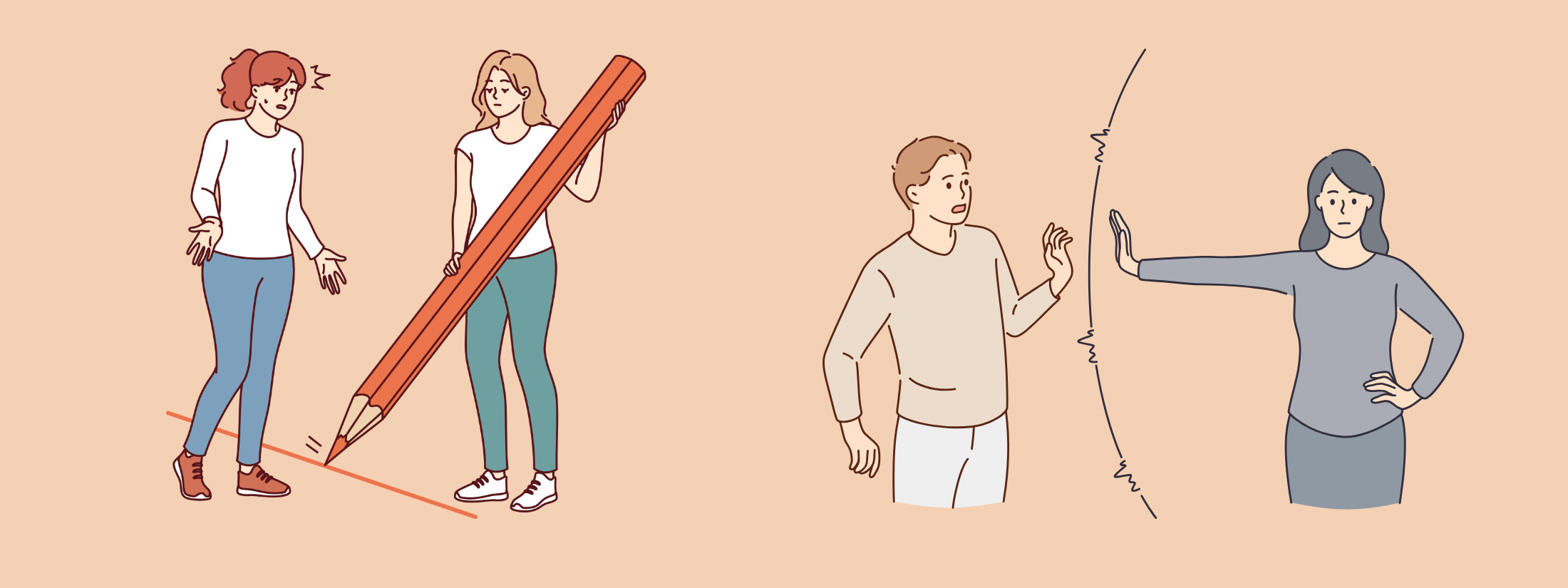
What Are Boundaries?
A lot of us were never taught properly how to set boundaries. Instead, we learned quickly how we had to adapt. Oftentimes this meant pleasing others and tolerating discomfort, which resulted in pushing ourselves past our limits to keep the peace in relationships. But in the end, that came with a cost by making us feel overwhelmed and unsure of the needs we actually have. The essence of setting boundaries is not about trying to control others or keeping them out of your life. Actually, it is about clearly defining where you stand relative to the other person. Boundaries are there to protect your emotional energy and all the needs you have. This is especially the case in situations when your nervous system feels pressured.
I think it is very important to discuss boundaries with you, as it so vital to recognize which ones you have, how these sometimes disappear and how you can communicate these in a very healthy way without triggering conflict. My goal is for you to have a clear sense of your personal limits, a good boundary map and a few practical tools to protect yourself. Just one warning: boundary setting is a skill that feels uncomfortable. It requires practice and compassion. Hard doesn’t mean wrong, it actually signals you are learning something new!
Types of Boundaries
Boundaries should NOT be seen as a wall or hard line. It’s instead a signal supposed to communicate what feels respectful and safe to you. From a psychological perspective a boundaries helps to regulate a relationship because if reduces confusion and resentment. If you look at boundaries, you can broadly divide them in three categories:
1. Unenforced Boundaries (Over-accommodating)
In this case, your boundaries are not enforced enough and it means you consistently put others’ needs before your own. This could look like saying yes when you mean no, avoid conflict or just ignore limits to ensure harmony.
Signs often look like:
People-pleasing
Building resentment over time
Difficulty saying no
Feeling responsible for other people’s emotions
2. Flexible Boundaries (Healthy Regulation)
These would be the boundaries that will be most successful in your life and create the least conflict. These limits can be adjusted based on context and trust, where needs are clearly discussed. Signs of flexible healthy ones:
Awareness of your own limits
Ability to say no without overexplaining yourself
Mutual respect for each other
Emotional clarity
3. Rigid Boundaries (Over-accommodating)
The last category are boundaries that have become inflexible as they are used as a self-defense mechanism. This looks like withdrawal and shutting down so people are kept at a distance, ultimately to avoid conflict or vulnerability.
Signs often look like:
Intimacy avoidance
Difficulty asking for help
Emotional distancing
Having the mentality of ‘handling it alone’
Boundary Self-Assessment
Here I have an exercise for you that hopefully will help you become aware of how you respond when your limits are tested.
Keep reading with a 7-day free trial
Subscribe to The Present Psychologist Paper to keep reading this post and get 7 days of free access to the full post archives.