
How to Stop Overthinking
A practical workbook to break the cycle

Dear mental health advocate,
Do you struggle with looping thoughts in your head? Are you intellectualizing your problems by trying to think them away instead of feeling them? Then today’s workbook about dealing with overthinking might just be the right fit for you. These workbooks are part of the premium subscription of The Present Psychologist Paper. Want to know how you can break this cycle and become a better version of yourself?
What Is Overthinking?
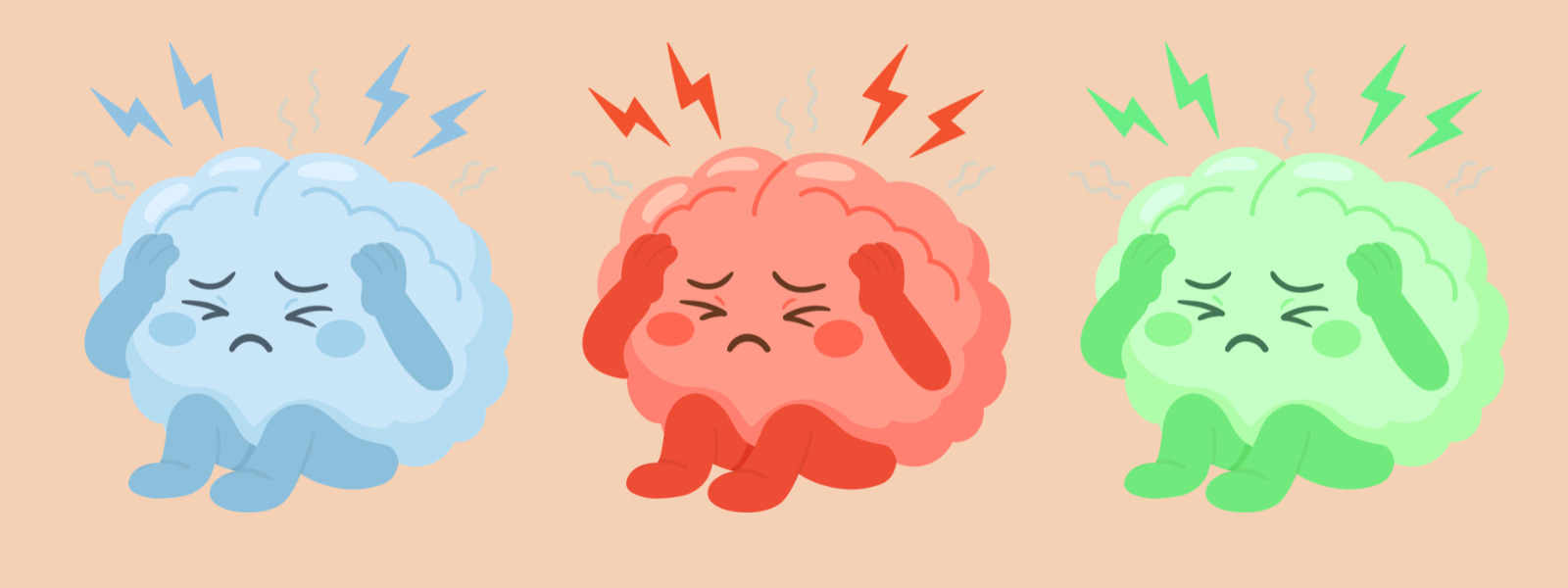
It’s funny when you think of it. We all have them, constantly racing through or mind. But, most of us were never taught how to actually deal with our thoughts (I surely never was). Instead, we learned to follow them. As humans we often replay conversations in our head over and over again. Or, we anticipate the worst‑case scenarios before something has even happened. Have you ever tried to mentally ‘solve’ situation that don’t have clear answers? Over time, this can feel terribly exhausting as if your mind is always running, but rarely arriving anywhere.
What you should really keep in mind though is that overthinking isn’t a sign that something is wrong with you. In many ways, it’s a logical attempt to (re)gain control. The only problem here is that the more we try to think our way out of uncertainty, the more we often get stuck inside it.
This month, I’d like to focus on understanding how overthinking actually works so you can recognize when your mind moves into these loops. It is vital to practice simple ways to interrupt them. By the end of this workbook, you will hopefully have a clearer understanding of your thinking patterns and awareness of your personal ‘overthinking triggers’. It will lead to a small set of tools you can use to return to mental clarity.
Don’t forget: overthinking is a very tough to break habit. And like any habit, it can be changed, but not by forcing yourself to stop thinking. Instead, you do it by learning how to relate to your thoughts differently. That takes time a lot of time and it takes a lot of practice (to be honest, I still struggle with it, I’m a deep overthinker).
Understanding The Overthinking Loop
In general, overthinking happens in a pretty predictable pattern. It’s not random, because your brain has learned to rely on when things feel uncertain or stressed. Basically there are three elements and states we can discern:
1. Anticipation (focused on the future)
Here your mind tries to predict what might happen in the future. It will generate all sorts of scenarios and it many cases will even produce the worst case possibilities. This state creates anxiety because the brain is trying to solve something that hasn’t happened yet.
Often, this anticipation looks like:
‘What if?’ thinking
Planning all sorts of outcomes
Imagining all the negative scenarios
Struggling to relax
2. Analysis (problem-solving mode)
In this particular state your mind strongly believes that you can figure things out better through deeper thought. You replay situations, analyze conversations and try to find the right answer. It can feel productive, but often keeps you stuck.
The following symptoms can occur:
replaying past interactions
trying to understand other people’s intentions
searching for certainty
overanalyzing decisions
3. Rumination (repetition loop)
When you are ruminating, it basically means that your thinking has become circular. You keep revisiting the same thoughts without moving towards a solution. It actually is the part where your overthinking will shift from processing more into a loop.
Ruminating includes often:
repeating the same thoughts over and over again
feeling mentally stuck
difficulty letting things go
feeling emotionally exhausted
The vital part to understand is that your goal should not be to stop thinking completely (that’s going to be hard). Instead, the goal is to recognize when your thinking stops being helpful and you should gently step out of the loop.
